Beyond Standing Still: Expanding Balance Assessment with HS-mCTSIB
Dilemma: Data-Driven Decision-Making in a Busy Clinical Environment
Balance assessment is a routine part of daily clinical practice, regardless of rehabilitation setting. However, assessing balance quickly, consistently, and in a clinically meaningful way is not always easy. Clinicians often have limited time and a wide range of patient needs, and it can be difficult to use technology in a way that produces clear, usable results during the initial evaluation and treatment planning. For this reason, tools that provide objective, reliable data and are simple to use are often preferred in busy clinical environments.
Looking at our usage data across Balance Advantage software, it’s clear that clinicians using our Portable Essential™ systems rely on several balance protocols depending on the patient and clinical scenario. One protocol consistently stands out as the most frequently used starting point: the Modified Clinical Test of Sensory Interaction on Balance ( mCTSIB).
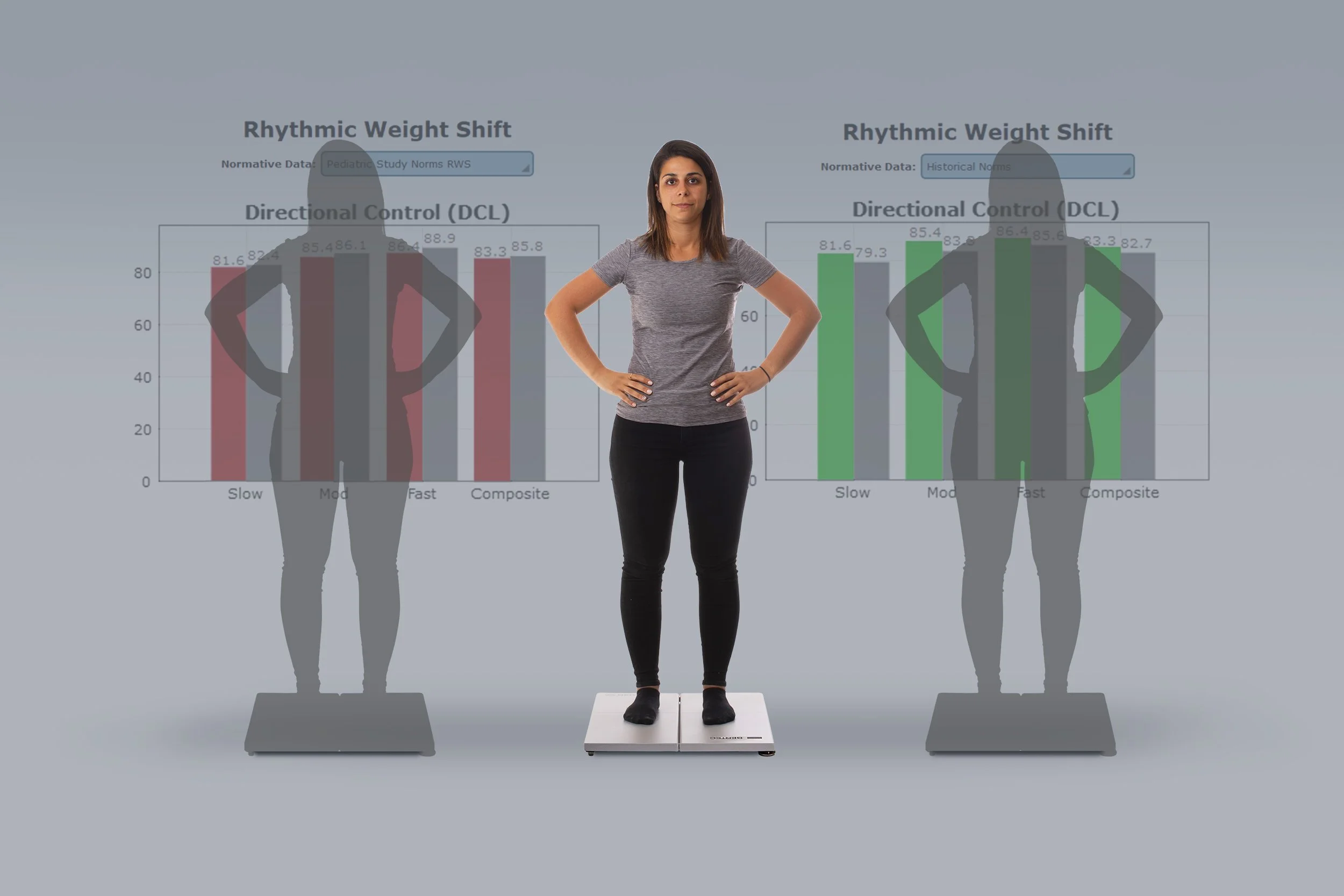
The mCTSIB contributes to our understanding about how much a person sways while standing still, both with eyes open and eyes closed on firm and foam surfaces. These subtle, yet important, postural adjustments are frequently invisible to the eye. When performed on the Portable Essential™ balance plate, the mCTSIB provides clinicians with a quick, objective snapshot of postural stability—making it especially valuable in busy clinical environments where time and outcomes-based data matter.
The goal is to remain standing as quietly as possible while minimizing sway-but as we’ve heard from many clinicians, this task is easier said than done for their patients. The mCTSIB protocol, when performed on the balance plate, quantifies patient sway to provide both the clinician and patient baseline information on the patterns and velocity of sway, track changes over time, and aids in determining appropriate next steps in rehabilitation. In addition to data-driven decisions for the clinician, patients increase their “buy-in” and motivation when they can see their numbers improve over time. The results of the balance assessments are used to seamlessly transition to balance activities using the force plate. Visual feedback using the center of pressure to move the cursor during the training reinforces proper movement patterns and is a powerful motivating tool.
Recently, a clinician who uses our Portable Essential™ system shared some stories that really reinforced the value of this kind of objective data. She told us how engaged patients become when they can actually see their balance scores—often for the first time—and then watch those numbers improve over the course of therapy. For many patients, visual feedback is incredibly motivating. It turns balance rehabilitation from something abstract into something tangible, measurable, and encouraging.
Static Balance Isn’t the Whole Story
Tools like the mCTSIB check all those boxes we discussed earlier: quick, objective, precise, and meaningful data. At the same time, no single test performed in isolation will provide a complete clinical picture. Data obtained from the Portable Essential™ is best integrated with the rest of the clinical examination, including the individual’s unique functional demands. This is where relying only on static balance measures might not show the full picture.
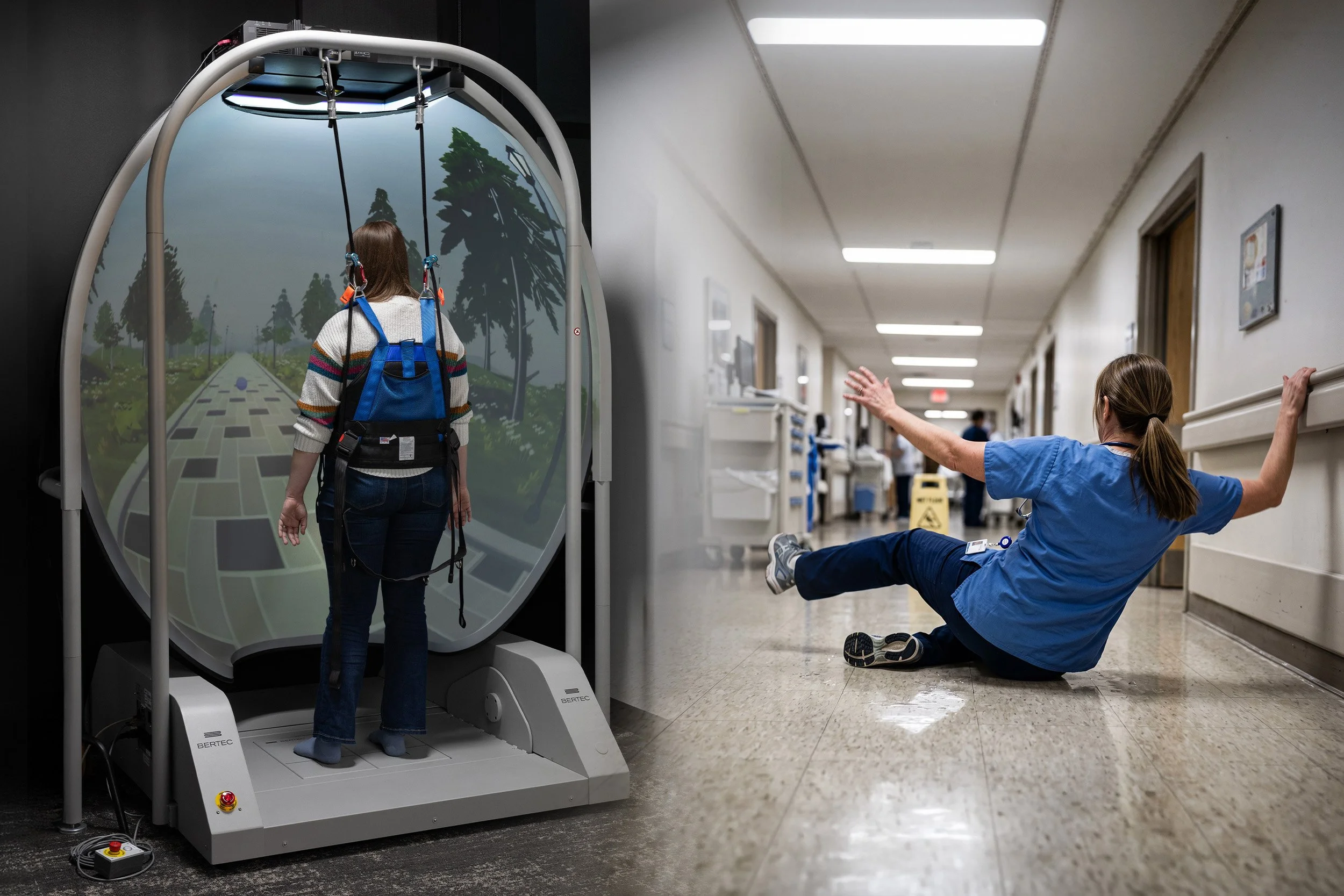
A huge part of the human balance system depends on what’s going on in your head, specifically how your visual, vestibular, and proprioceptive systems interact with neurocognitive skills. The coordination between the visual and vestibular systems is key to maintaining stable vision and balance while turning the head during daily activities. Think of how your head and eyes are both moving when looking up to place something on an overhead shelf, looking left and right to check traffic while driving or walking, or running down an athletic field looking to catch a ball—all while filtering irrelevant information or deciding where to move relative to the environment. Maintaining your balance while performing these activities is crucial to preventing falls. This is even more important in active healthy aging to prevent falls and maintain independence.
By contrast, the traditional mCTSIB evaluates balance with the head completely still. While the information it provides is an essential first step, it misses a key component clinicians need to fully understand in determining how a patient functions in the real world.
Expanding Balance Assessment with Head Motion
For facilities with our CDP/IVR system, clinicians have access to the gold-standard balance assessment: the Sensory Organization Test (SOT). However, the SOT alone may be limited in its ability to detect subtle functional impairments in those with greater performance demands (e.g. military, athletes, fire and rescue). When increased balance complexity is needed, the Headshake SOT (HS-SOT) introduces controlled head motion to add a dual-task component while further challenging the vestibular system.
Until now, however, clinicians using our Portable Essential™ system haven’t had an equivalent option to increase the challenge of the mCTSIB to detect these subtle impairments in higher functioning individuals.
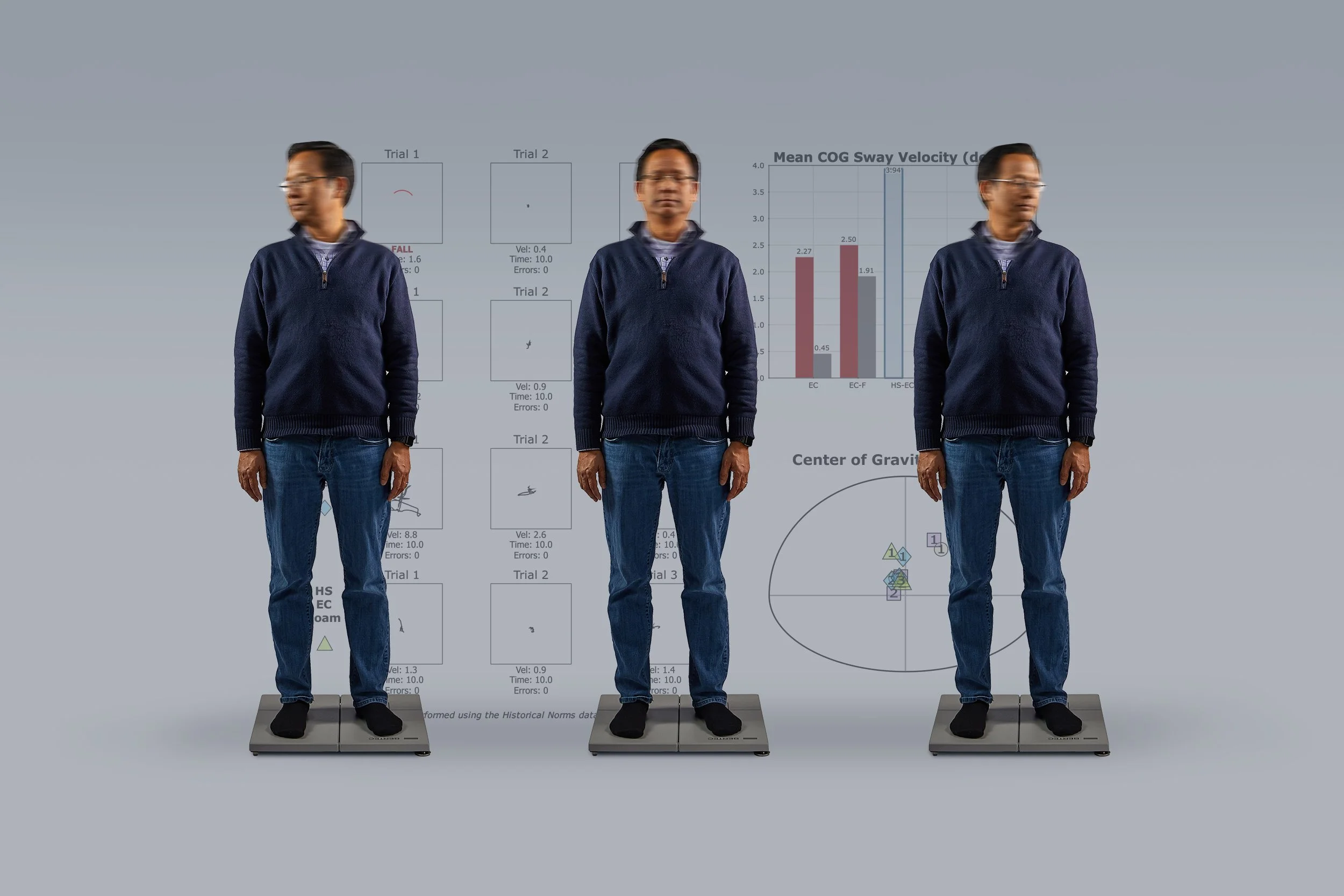
With the Balance Advantage™ 2.5 software release, we introduced a new protocol called Headshake mCTSIB (HS-mCTSIB). Similar to the HS-SOT, this protocol adds controlled head motion to better engage the vestibular system while eliminating visual cues and distorting proprioceptive inputs.
When we shared the new HS-mCTSIB with the clinician who uses our Portable Essential daily for both assessment and treatment, her reaction said it all. She told us that she already incorporates activities with head motion into her balance treatments - but until now, those exercises were difficult to quantify in a consistent, objective way. They are valuable, but the data to clearly track performance and progress just wasn’t there.
With HS-mCTSIB, she can now assess those same head-motion challenges using a protocol she already knows and trusts, while finally capturing meaningful, measurable data. It allows her to quantify something she was already doing clinically - and to do so efficiently, within her existing workflow.
With the introduction of HS-mCTSIB in Balance Advantage™ 2.5, clinicians using the Portable Essential™ system gain a more complete picture of how their patients truly function because the best balance assessments provide actionable data to drive clinical decision-making and document progress throughout the rehabilitation program from start to finish.
References:
Akgun, N., Baydan Aran, M., & Meco, C. (2023). Investigation of Head Shake Sensory Organization Test (HS-SOT) in three planes: Test-retest reliability and age-related differences. Gait & Posture, 101, 114–119. https://doi.org/10.1016/j.gaitpost.2023.01.016
Altın, B., & Aksoy, S. (2020). Clinical significance of head shake movement in three planes in individuals with dizziness. American Journal of Otolaryngology, 41(1), 102308. https://doi.org/10.1016/j.amjoto.2019.102308
Herman, D., Jones, D., Harrison, A., Moser, M., Tillman, S., Farmer, K., Pass, A., Clugston, J., Hernandez, J., & Chmielewski, T. (2017). Concussion May Increase the Risk of Subsequent Lower Extremity Musculoskeletal Injury in Collegiate Athletes. Sports Medicine (Auckland, N.Z.), 47(5), 1003–1010. https://doi.org/10.1007/s40279-016-0607-9
Jildeh, T. R., Castle, J. P., Buckley, P. J., Abbas, M. J., Hegde, Y., & Okoroha, K. R. (2022). Lower Extremity Injury After Return to Sports From Concussion: A Systematic Review. Orthopaedic Journal of Sports Medicine, 10(1), Article 1. https://doi.org/10.1177/23259671211068438
Roberts, H. J., Hoppes, C. W., Del Toro, Y. M., Lambert, K. H., & Springer, B. A. (2024). Normative Values for the Head Shake Sensory Organization Test in an Active Duty Military Cohort. Military Medicine, 189(9–10), e2078–e2084. https://doi.org/10.1093/milmed/usae086
Vandenheever, D., & Lambrechts, M. (2023). Dual-task changes in gait and brain activity measured in a healthy young adult population. Gait & Posture, 103, 119–125. https://doi.org/10.1016/j.gaitpost.2023.04.021
Zampieri, C., Leary, J. B., Shahim, P., Damiano, D., Ho, P.-S., Pham, D. L., & Chan, L. (2023). Associations between white matter integrity and postural control in adults with traumatic brain injury. PLOS ONE, 18(11), Article 11. https://doi.org/10.1371/journal.pone.0288727