Balance Plates : A Critical Part of Patient Assessments in Physical Therapy
In physical therapy and clinical rehabilitation, objective data is essential for making informed decisions about patient care. Balance and postural control are foundational to mobility, fall prevention, and overall function—but they can be difficult to assess accurately using observational methods alone. This is where balance plates come in.
“With balance plates, physical therapists and clinicians can give patients real data they can see. It keeps patients motivated and makes every session more meaningful for the patient and the practitioner,” shares Megan Cotterman, Product Manager at Bertec.
Balance plates provide a reliable and measurable way to assess postural stability, functional balance, and sway patterns. For physical therapists, these tools deliver more than just numbers—they offer insights that guide treatment, improve outcomes, and support clinical efficiency.
Here are three key reasons why balance plates are an essential part of patient assessments:
1. Objective Data Improves Diagnostic Accuracy
Traditional balance assessments rely on visual observation or subjective scales, which can vary between clinicians and may miss subtle impairments. Balance plates measure center of pressure (CoP), sway velocity, and stability indices in real time, providing quantifiable insights into how a patient controls posture under different conditions.
This level of precision is particularly valuable for:
Observing early signs of neuromuscular or vestibular impairment
Tracking recovery progress after surgery, concussion, or injury
Detecting asymmetries that may not be obvious in visual assessments
With this objective data, therapists can make more confident diagnoses and tailor interventions more precisely.
2. Faster, More Targeted Physical Therapy Treatment Planning
Using balance plates streamlines the assessment process, allowing clinicians to collect meaningful data in just minutes. The result? A more focused and efficient care plan.
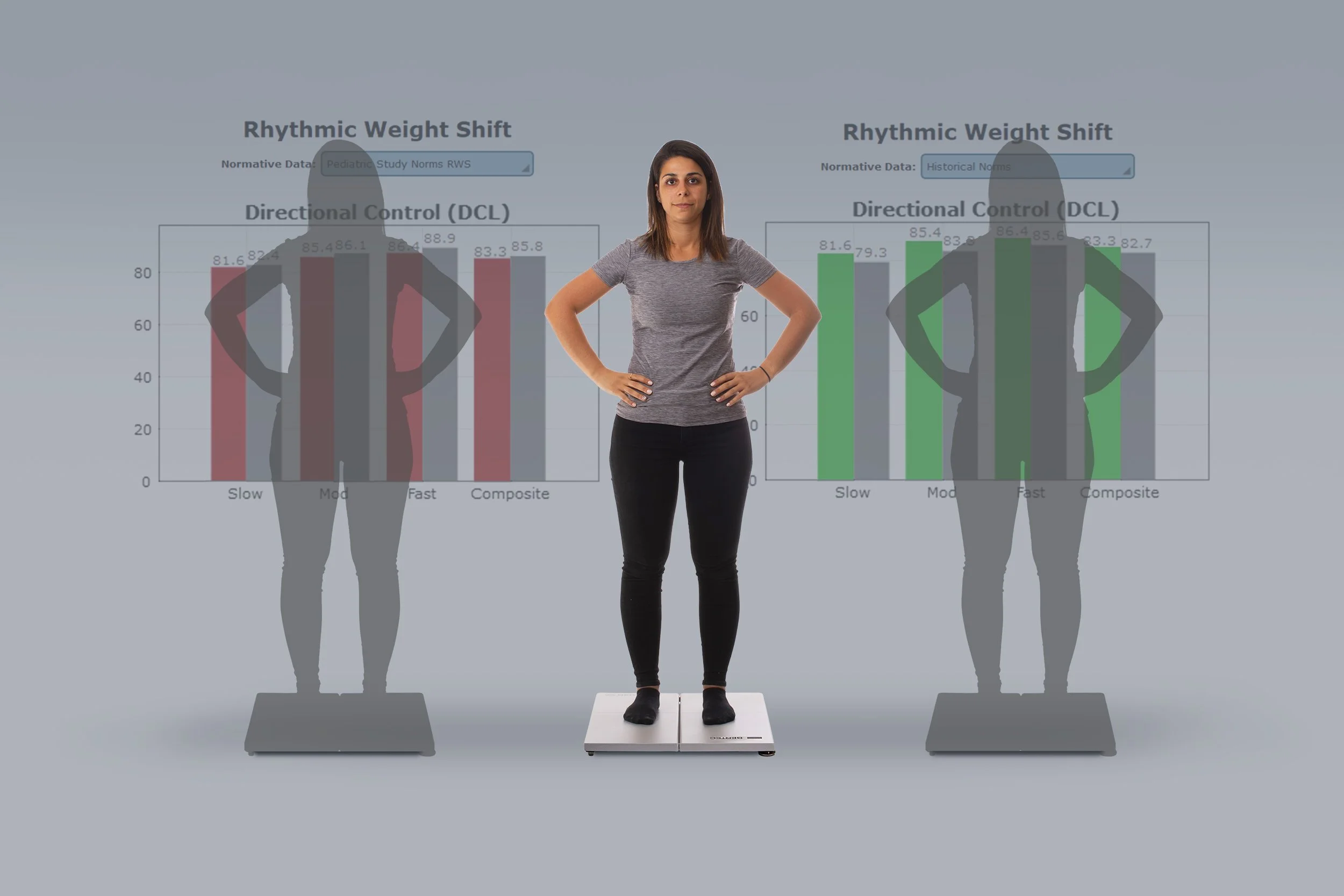
In a clinical setting, time is a premium. With Bertec’s integrated software, assessments are easy to interpret and provides several different reports which allow therapists to:
Compare patient data to age-matched norms
Document changes session-to-session
Adjust balance, gait, or vestibular rehab programs on the spot
This leads to faster decision-making and better outcomes, especially when working with patients recovering from stroke, TBI, or orthopedic surgeries.
3. Stronger Patient Engagement and Outcomes
Data from balance plates provides patients with clear, visual, and objective feedback about their performance—something they can see and understand in real time.
This transparency builds trust in the therapy process and helps patients stay motivated, as they can track measurable improvements in their balance, stability, and mobility over time. By showing progress session to session, clinicians can better explain the “why” behind treatment plans, improving adherence and participation. For patients recovering from injury, surgery, or managing chronic conditions, this data-driven approach reinforces confidence and accountability.
Ultimately, the ability to quantify progress helps foster stronger engagement, leading to more consistent attendance, better compliance, and improved overall outcomes.
Conclusion
Balance plates are more than just assessment tools—they’re critical assets for any physical therapy practice focused on outcomes, efficiency, and patient care. By delivering reliable data, supporting personalized treatment, and demonstrating clinical value, balance plates help therapists make smarter decisions while elevating the standard of care.